That’s why concrete testing, pre‑pour inspections, and defined quality hold points are essential parts of every foundation pour, ensuring the concrete and supporting works meet required performance, strength, and durability standards under Australian regulations.
Why Concrete Testing Matters
Concrete may appear consistent once poured, but its long‑term performance depends heavily on:
- Correct mix design
- Proper placement and compaction
- Adequate curing
- Environmental conditions at the time of pouring
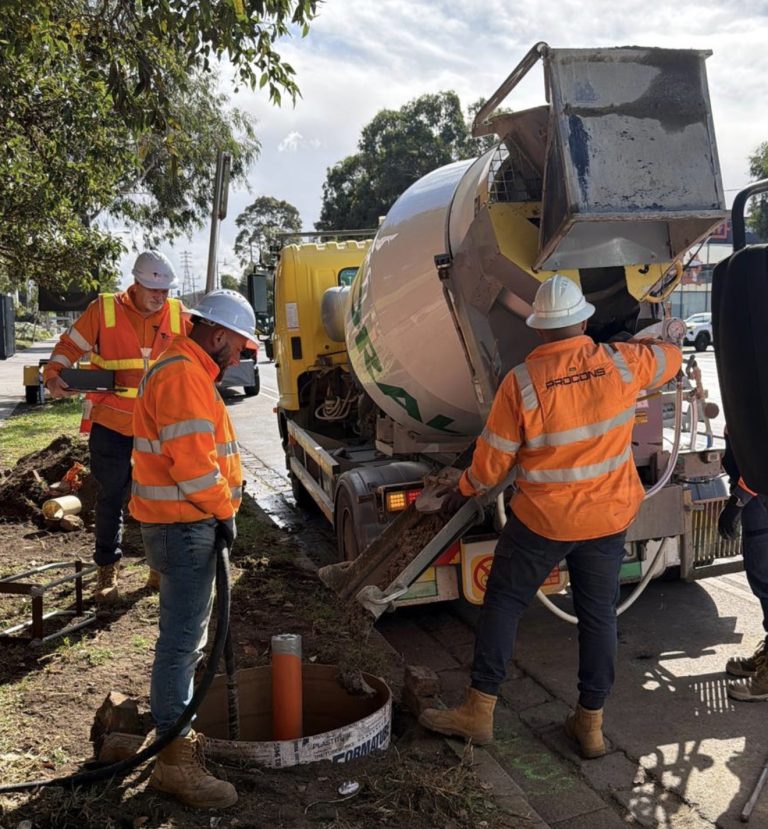
Concrete testing verifies that the material delivered and placed on site matches the engineer’s specification and complies with Australian Standards.
Proper concrete testing helps to:
- Confirm the concrete achieves the required compressive strength
- Ensure long‑term structural integrity and durability
- Identify issues before they become costly defects
- Demonstrate compliance with Australian Standards and building approvals
- Protect clients, builders, and owners from future liability
Skipping or inadequately managing testing places the entire project at risk.
The Role of Pre‑Pour Inspections and Quality Checks
Before any concrete is poured, pre‑pour inspections and quality checks are a critical control point in foundation construction. Once concrete is placed, errors are difficult and expensive to rectify, making pre‑pour inspections essential.
Pre‑pour inspections verify that all foundation elements are correctly prepared in accordance with approved engineering drawings and specifications.
Typical Pre‑Pour Inspection Checks Include:
- Formwork set‑out, dimensions, alignment, and stability
- Reinforcement size, spacing, laps, and anchorage
- Correct concrete cover to reinforcement
- Starter bars, cast‑in items, hold‑down bolts, and penetrations correctly positioned
- Footing base clean, compacted, and free from debris or standing water
- Ground conditions consistent with the geotechnical report
- Access and placement methods confirmed
These checks ensure the foundation is ready to receive concrete and will perform as designed.
Hold Points Prior to Concrete Pouring
Pre‑pour inspections are commonly managed as formal hold points within construction quality assurance processes.
What Is a Hold Point?
A hold point is a mandatory inspection stage where work must not proceed until approval is provided by the relevant authority, such as:
- Project engineer
- Superintendent
- Certifier
- Client representative
For foundation works, the pre‑pour inspection is a key hold point.
Typical Foundation Hold Points Include:
- Completion of excavation and base preparation
- Installation of reinforcement and formwork
- Pre‑pour inspection sign‑off
- Approval to proceed with concrete placement
Concrete must not be poured until the hold point is released. This ensures compliance, traceability, and accountability.
Australian Standards for Concrete Testing
In Australia, concrete used in structural foundations must comply with:
- AS 1379 – Specification and supply of concrete
- AS 3600 – Concrete structures
These standards define:
- Minimum strength grades
- Sampling and testing methods
- Testing frequency
- Acceptance criteria
- Responsibilities of suppliers, contractors, and testers
Concrete testing provides documented evidence that the foundations meet these requirements — a key consideration for engineers, certifiers, and insurers.
Key Concrete Tests for Foundations
1. Slump Testing (Workability)
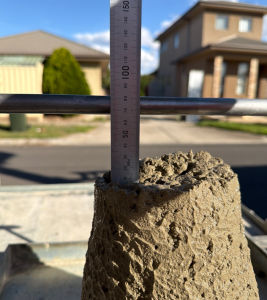
Slump testing is carried out on site prior to placement to confirm the concrete’s consistency.
- Ensures the mix is not too wet or too dry
- Confirms suitability for pumping and placement
- Detects unauthorised addition of water
Incorrect slump can reduce strength and increase cracking risk.
2. Compressive Strength Testing
This is the most critical test for foundation concrete.
- Concrete samples (cylinders or cubes) are taken during the pour
- Samples are cured and tested at standard intervals, typically 7 and 28 days
- Results confirm compliance with the engineered design strength
If compressive strength is not achieved, remedial action may be required, making testing essential.
3. Placement and Compaction Monitoring
Quality assurance continues during the pour:
- Proper vibration and compaction
- No segregation or honeycombing
- Reinforcement remains correctly positioned
Poor placement can compromise structural performance even if the concrete mix is compliant.
4. Curing Observation
Correct curing is essential for strength development and durability.
- Confirms curing methods are correctly applied
- Reduces shrinkage cracking
- Ensures concrete achieves full design strength over time
Risks of Inadequate Testing and Missing Hold Points
Failing to implement proper pre‑pour inspections, hold points, and testing can result in:
- Structural cracking or settlement
- Reduced load‑bearing capacity
- Water ingress and durability issues
- Non‑compliance with approvals and standards
- Costly delays, disputes, or legal action
In severe cases, foundation systems may require partial or full replacement.
Benefits for Clients
For clients, a structured approach to pre‑pour inspections, hold points, and concrete testing provides confidence and protection.
Assurance foundations are built to engineered design
Compliance with Australian Standards
Independent verification of workmanship and materials
Reduced risk of defects and rectification
Clear documentation for certifiers, insurers, and future owners
Simply put, quality checks at the right time protect your investment.
A Critical Step You Can’t Afford to Miss
Concrete foundation testing, supported by formal pre‑pour inspections and hold points, is not an optional extra — it is a fundamental requirement of responsible construction.
From residential builds to large commercial and infrastructure projects, these controls ensure foundations are built correctly the first time and perform as intended for decades to come.
By engaging experienced professionals and following Australian Standards, clients can be confident their project truly starts on solid ground.