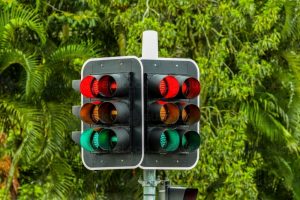
This article explains the most common traffic signal faults in Victoria, why they happen, who is responsible for repairs, and what steps should be taken when a fault is identified.
What Is a Traffic Signal Fault?
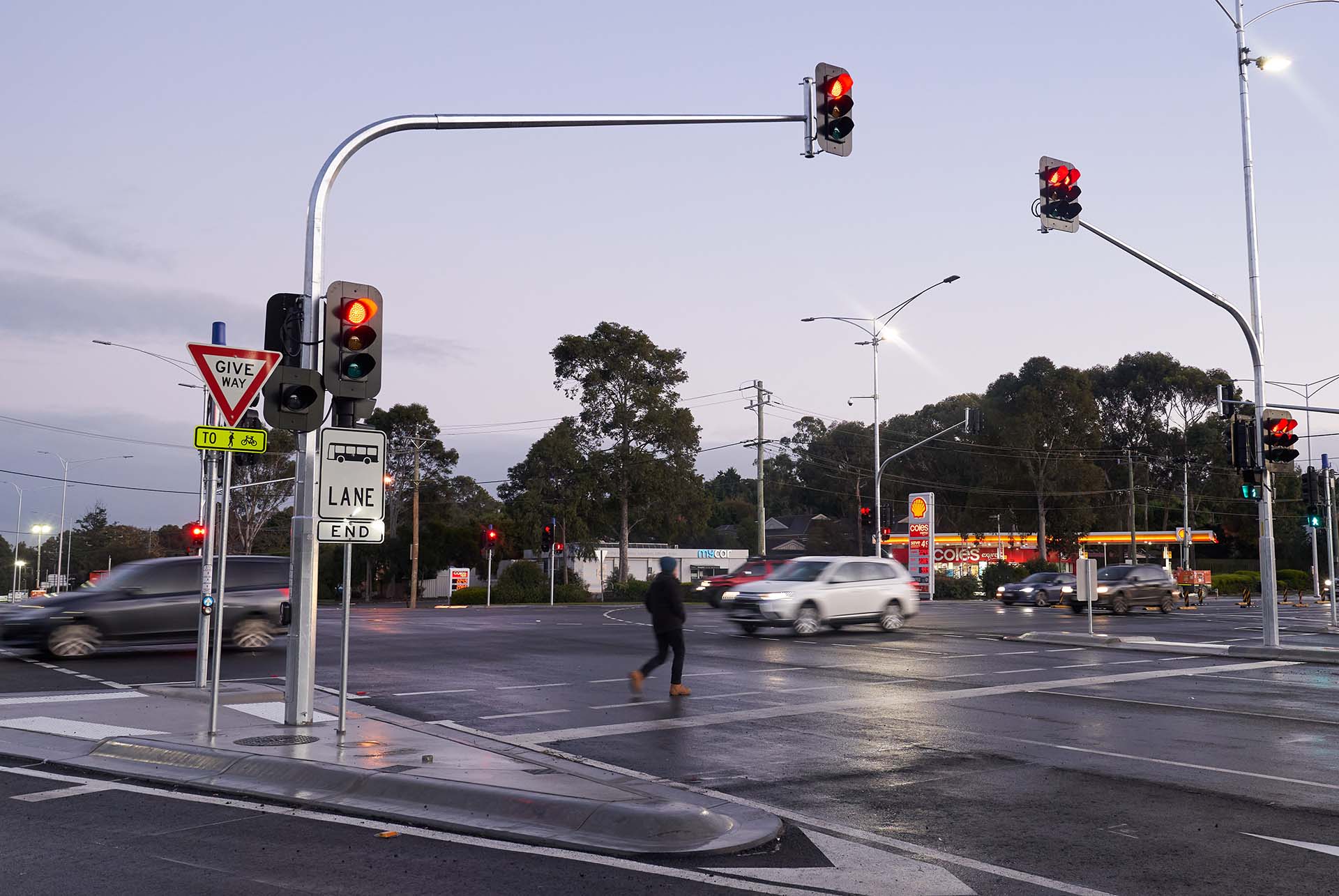
A traffic signal fault occurs when a traffic light or associated system does not operate as intended. This can involve complete signal failure, incorrect signal sequencing, dim or blank displays, or pedestrian signals not responding.
In Victoria, traffic signals form part of managed road infrastructure and are designed to operate continuously and reliably. Any deviation from normal operation is treated as a fault that requires prompt assessment and, where necessary, urgent rectification.
Common Types of Traffic Signal Faults in Victoria
Traffic signal faults can appear in several ways, including:
1. Complete Signal Outage
All signal heads are dark, often due to:
- Power failure
- Communication loss
- Cabinet or controller malfunction
- Vehicle collision damaging infrastructure
When this occurs, the intersection typically defaults to give way or stop sign rules, depending on signage.
2. Flashing Yellow or Flashing Red
Signals may enter a flashing mode due to:
- Controller errors
- Safety fail‑safe activation
- Network communication issues
While flashing modes are designed to maintain safety, they still indicate a fault requiring investigation.
3. Incorrect Signal Phasing
This includes:
- Signals remaining red for extended periods
- Green arrows not activating
- Conflicting movements receiving green simultaneously
These faults can significantly increase crash risk and congestion.
4. Pedestrian Signal Faults
Common issues include:
- Push buttons not responding
- “Walk” symbols failing to illuminate
- Audible/tactile devices not functioning (particularly critical for vision‑impaired users)
5. Vehicle Detection Failures
Detection faults occur when:
- Inductive loops, radar, or camera systems stop detecting vehicles
- Traffic queues are not recognised, causing inefficient signal operation
Why Traffic Signal Faults Are a Serious Issue
Traffic signal faults are treated as high‑priority safety events in Victoria because they can:
- Increase the likelihood of side‑impact and rear‑end collisions
- Create confusion for drivers, cyclists, and pedestrians
- Disrupt public transport operations and freight movement
- Cause extended congestion on arterial roads
- Reduce accessibility for vulnerable road users
For worksites and construction zones, a faulty signal can also place contractors and traffic controllers at immediate risk.
What Causes Traffic Signal Faults?
Traffic signal faults can arise from a range of factors, including:
- Electrical failures (power supply, wiring, surge damage)
- Weather impacts (storms, lightning, flooding, heat)
- Vehicle strikes on poles, cabinets, or signal heads
- Aging infrastructure and component wear
- Software or communications failures in coordinated signal networks
- Roadworks and service utility works interfering with cabling or detection systems
Who Is Responsible for Traffic Signals in Victoria?
In Victoria, traffic signals are managed by road authorities depending on the road classification:
- State arterial roads and signalised intersections are overseen by the Victorian road authority (via its traffic management and signal operations teams).
- Local roads may involve coordination between councils and the state authority, particularly where signals interact with arterial networks.
Specialist signal maintenance contractors are typically engaged to monitor, repair, and upgrade traffic signal assets.
What to Do If You Encounter a Traffic Signal Fault
For Road Users
If you encounter a faulty traffic signal:
- Follow road rules for unlit or flashing signals
- Proceed cautiously and watch for other road users
- Avoid assuming signal priority
- Report the fault as soon as it is safe to do so via the appropriate Victorian road authority channel
Prompt reporting helps reduce risk and restore normal operation quickly.
For Contractors and Traffic Managers
If a fault is identified during works:
- Treat the situation as a traffic safety incident
- Implement temporary traffic control if required
- Notify the supervising road authority immediately
- Do not modify or interfere with signal equipment unless authorised
How Traffic Signal Faults Are Rectified
Once reported, traffic signal faults are typically:
- Logged and categorised by urgency
- Remotely diagnosed where possible
- Attended on site by qualified signal technicians
- Tested and monitored to confirm safe operation
Critical faults at high‑risk intersections are often responded to as a priority, including after hours.
Preventing Traffic Signal Faults During Roadworks
Many signal faults arise unintentionally during construction or civil works. Best practice includes:
- Dial‑before‑you‑dig checks and service locating
- Clear communication with signal and electrical asset owners
- Protection of underground detection loops and conduits
- Traffic management plans that consider signal proximity
- Post‑works inspection where works occur near signal assets
Prevention reduces delays, safety risks, and costly emergency call‑outs.
Traffic Signal Contractors | Installation Maintenance Solutions